
Post-Traumatic Stress Disorder

If you or a loved one are struggling following a traumatic experience, a mental health professional can help.

Traumatic events can induce an intense stress response that often lingers long after the incident is over. These stress responses during the months or years following an event are known as post-traumatic stress disorder (PTSD). In the United States, 12 million adults could have PTSD in any given year, according to the U.S. Department of Veterans Affairs.

While currently labeled as an anxiety disorder, the DSM-5 (Diagnostic and Statistical Manual of Mental Disorders) committee clarifies that PTSD is a “trauma and stressor-related disorder,” as reported by the National Library of Medicine.

*If this is a crisis situation, call 9-1-1 immediately.
What Are Common Symptoms of PTSD?

Post-traumatic stress disorder causes a variety of symptoms, which can begin soon following the event or appear long after. To get a diagnosis of PTSD, symptoms must last at least a month and interfere with daily life and relationships.

The National Institute of Mental Health (NIMH) provides some potential symptoms of PTSD:

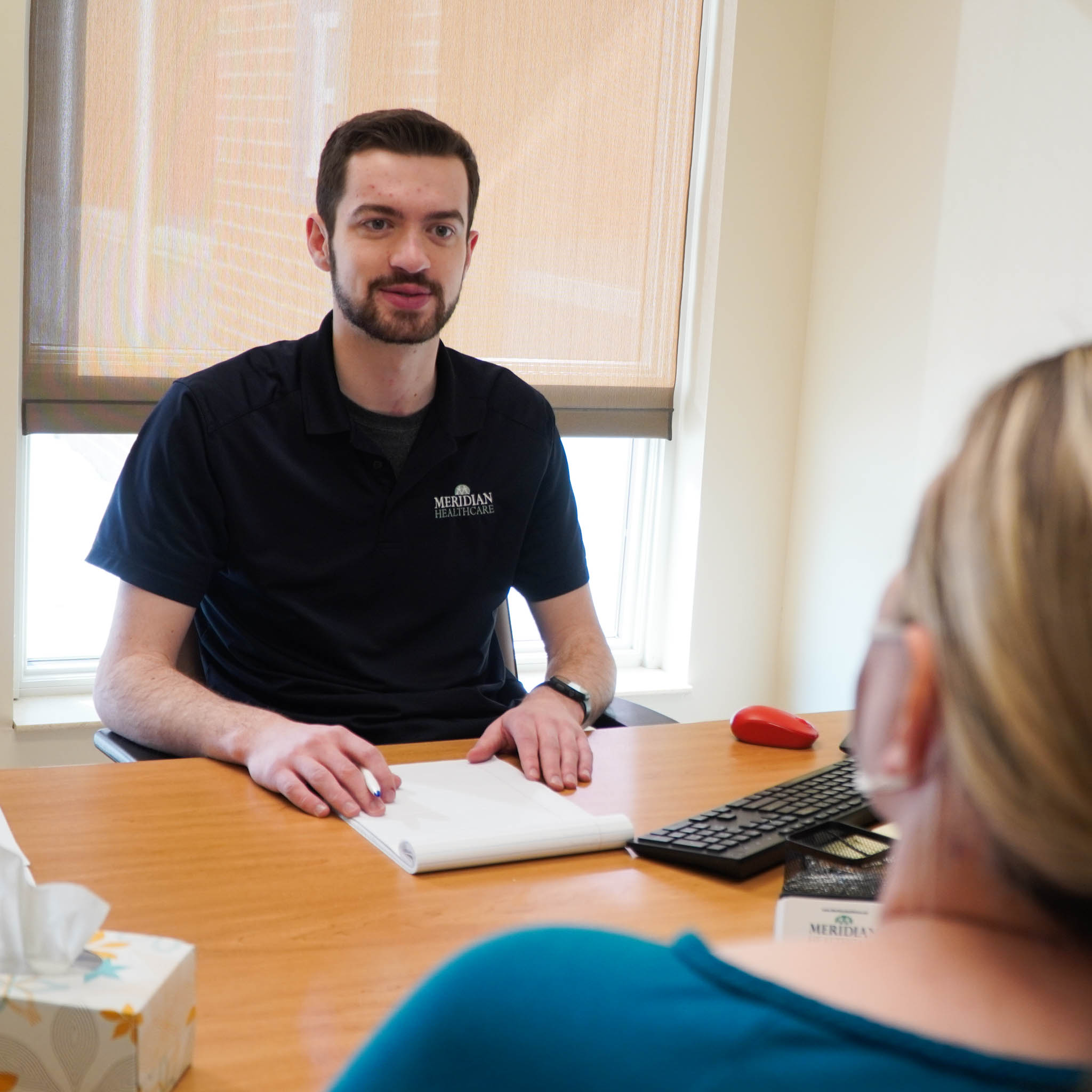
Anxiety counseling session at Meridian Healthcare

Flashbacks

Flashbacks (when a person feels like they are reliving their traumatic experience) are the most commonly associated symptom of PTSD. Constantly re-experiencing the event leads to higher levels of stress.

Reactivity

Those with PTSD experience high anxiety and stress levels, causing their fight-or-flight response to be triggered much more easily.

Negative Thoughts

Similar to other mental illnesses, negative thoughts are common symptoms of PTSD. These symptoms are similar to depression but are often centered around the traumatic experience.

Angry Outbursts

Those with severe PTSD are constantly in a state of anxiety and stress. This constant stress on the body often leads to irritability, aggressiveness, or angry outbursts.

Sleeping Problems

PTSD-related problems often co-occur with trouble sleeping. This means individuals are more likely to become irritable and show physical signs of stress. Trouble sleeping will exacerbate other symptoms of PTSD.

Substance Use

Someone suffering from post-traumatic stress disorder may look for ways to reduce symptoms. In certain cases, this desire to escape flashbacks or other PTSD-related problems leads to substance abuse. Similarly, these individuals are more likely to participate in risky or potentially life-threatening behavior.

Find Hope With Meridian

If you or a loved one are suffering with symptoms of PTSD, know that help out there! The professional, compassionate counselors at Meridian HealthCare are ready to work with you to discover the best treatment options for your unique, individual needs.

Risk Factors for Post-Traumatic Stress Disorder

Post-traumatic stress disorder affects people from all demographics and age groups: adults, adolescents, and young children alike.

As with any mental health problem, genetics plays a role in how a person is affected. However, there is no way to predict when (or if) a traumatic event will occur for someone who is genetically predisposed. Any person can experience an event, but the data provided by the National Center for PTSD discovered that there are types of traumatic events that tend to affect women more than men — and vice versa.

While men (6 in every 10) are more likely than women (5 in every 10) to experience at least one traumatic experience, men are affected by different circumstances. Men are more likely to develop PTSD from natural disasters, car accidents, physical assault, or combat, while women more commonly experience PTSD symptoms from sexual assault or child abuse.

A traumatic event doesn’t necessarily mean one singular incident. Ongoing situations that cause frequent and long-lasting fear, distress, and hopelessness can also lead to a post-traumatic experience disorder. Long-lasting, ongoing events are referred to as “Little t” traumas; singular events are labeled as “Big T” traumas.

PTSD Treatment Options

Post-traumatic stress disorder is a complicated mental health condition. It affects everyone differently, depending on their genetic makeup, life experiences, and the severity (or longevity) of the trauma. For that reason, several PTSD treatment options exist, all overseen or facilitated by a trained mental healthcare professional.

Exposure Therapy

Regular visits to your primary care provider are the best way to manage chronic health conditions – your doctor monitors changes and adjusts treatments over time, all while coordinating with specialists, as needed. This doesn’t just go for physical health conditions. It also pertains to mental health conditions (like anxiety and depression), as well.

Support Groups

Support groups are often part of an effective treatment plan for PTSD. Meeting with like-minded people helps the person feel less alone. Seeing someone with similar problems succeed and overcome their troubles can be motivating, as well. Social support helps tremendously in the effective treatment of PTSD, and includes support groups as well as talking with family members and other loved ones.

Psychotherapy

Psychotherapy, also known as talk therapy, allows people to work through their problems with a clinician or counselor. It’s an effective treatment for many different mental illnesses and can be used in conjunction with other types of treatment. There are many types of psychotherapy, including Cognitive Behavioral Therapy (CBT), Psychodynamic Therapy, Dialectical Behavior Therapy, Eye Movement Desensitization and Reprocessing (EMDR), and Experiential Therapy.

Medication

In severe cases, medication may be prescribed as part of PTSD treatment — although it is commonly in conjunction with some form of psychotherapy. Medication can alleviate symptoms of PTSD but will not eliminate the problem. Common prescriptions include antidepressants and SSRIs (serotonin reuptake inhibitors).

Patient picking up prescription at the Meridian Healthcare Pharmacy banner

A Pharmacy Dedicated to You

Meridian’s pharmacy is fully integrated into your care team, serving as a seamless extension
of your treatment experience - helping fill prescriptions with ease, providing same day convenience,
low-cost prescriptions, and personalized medical support.

Learn More
You’re Not Alone: Get the Support You Deserve After Baby

Struggling After Birth?
Get the Support You Need

If you're feeling overwhelmed with emotions after birth, especially
while navigating recovery, this free guide offers support, hope
and real resources for postpartum depression. Because taking
care of yourself helps you care of your baby, too.

You’re Not Alone: Get the Support You Deserve After BabyDownload Now

Recovering From Addiction
Can Feel Overwhelming

This guide explains the most common addiction
recovery terms so you can take your first steps feeling
a little more prepared and a lot less alone.

Learn Recovery Terms

Quit Gambling for Good

Gambling addiction is real — and recovery doesn’t have to be something
you face alone. Our free resource guide helps you build a plan,
understand your options, and take the first step toward lasting change.

Get the Guide

You Don’t Have to Face
Addiction Alone

Support, guidance, and hope are just a click away.
Our free guide connects you with helpful online resources
to take those first steps toward recovery — at your own pace,
in your own time.

Take the First Step
Get started on the road to recovery

Thinking About Going to Rehab?

Taking that first step into a treatment facility is a big deal —
and feeling unprepared can make it feel even bigger. This checklist
helps you pack, plan, and feel more confident as you start your
journey to recovery.

Preparing for Recovery checklistGet the Checklist!

Not Sure If You’re Ready?

Change can feel scary — but even thinking about it is a powerful first step.
This guide breaks down the stages of change, helping you
understand where you are and what steps to take next.

See Where You Are

Life Beyond Alcohol

Hope starts with one step. This guide helps you understand alcohol
dependence and shows you the path toward freedom, healing,
and a brighter future.

Find Your Way Forward

Staying Sober After Rehab

Recovery doesn’t end when rehab does — it’s a lifelong journey.
With the right tools, support, and guidance, long-term sobriety is possible.
We’re here to walk with you every step of the way.

Find Long-Term Support
Detox Background

Ready for the First Step?

Asking for help can be scary — but knowing what to expect can make
all the difference. This guide walks you through the first 48 hours,
making it easier to start your recovery journey.

Thinking About Getting HelpKnow What to Expect
Patient picking up prescription at the Meridian Healthcare Pharmacy_mobile

A Pharmacy Dedicated to You

Meridian’s pharmacy is fully integrated into your care team,
serving as a seamless extension
of your treatment experience - helping fill prescriptions
with ease, providing same day convenience,
low-cost prescriptions, and personalized medical support.

Learn More
Quitting smoking isn’t just about willpower; it’s about
having the right tools and support. Our free guide
covers how counseling, primary care, and other proven
methods can help you overcome cravings and stay
smoke-free for good.
Download NowBreak Free From Tobacco
You’re Not Alone: Get the Support You Deserve After Baby

Make Sure You're
Taking Care of Yourself

Postpartum depression can feel isolating, but you don't have
to go through it alone. This free guide offers practical tools,
trusted resources, and next steps to help you start healing.

Find ResourcesYou’re Not Alone: Get the Support You Deserve After Baby
Person with anxiety

Is It More Than Just Stress?

Anxiety disorders are more common than you might think —and recognizing the signs is the first step toward finding the right support. Use this helpful list to know what to look for.

Signs of anxietySigns of Anxiety Disorder

Could You Be Suffering From Depression?

Depression isn’t always easy to spot — especially in yourself.
This guide can help you recognize the warning signs,
understand what you’re feeling, and take steps toward healing.

Warning Signs of Depression

Find Effective Treatment at Meridian HealthCare

At Meridian HealthCare, our clinicians and counselors are trained in mental health treatment, including post-traumatic stress disorder (PTSD).

If you or a loved one needs help coping with life after a traumatic experience, Meridian is just a phone call away.